Best Outlander Filming Locations in Scotland
The best Outlander filming locations in Scotland are real, visitable places, and most of them sit within a short drive of Edinburgh. Doune Castle stood in for Castle Leoch, Midhope Castle became Lallybroch, and the village of Falkland played 1940s Inverness. This guide covers each landmark, the true history behind it, and how to see several in a single trip.
Screen tourism is now a serious part of why people come to Scotland. Roughly one in five visitors say film, television and books featuring the country inspire their trip planning. Outlander has driven a large share of that interest since the series first aired.
Which Outlander filming locations can you actually visit?
Nearly all the major sites are open to the public, which is unusual for a television production. Screen tourism contributed £161.4 million in visitor expenditure in 2023, according to VisitScotland, and historic attractions have leaned into their on-screen fame with signage, guides and props.
The headline locations are Doune Castle, Midhope Castle, the village of Falkland, Blackness Castle, Linlithgow Palace and Culloden Battlefield. Glencoe appears in the opening credits but was not a set for the cast. Some sites offer full interior access. Others, like Midhope, restrict visitors to the exterior.
Here is the quick picture:
- Full access: Doune Castle, Blackness Castle, Linlithgow Palace, Culloden
- Exterior only: Midhope Castle (Lallybroch)
- Walkable village: Falkland
- Scenery stop: Glencoe
Slàinte Scotland Tours builds guided group and private itineraries around these sites, which removes the rural driving and parking that trips up many self-planned visits.
Doune Castle: the real Castle Leoch
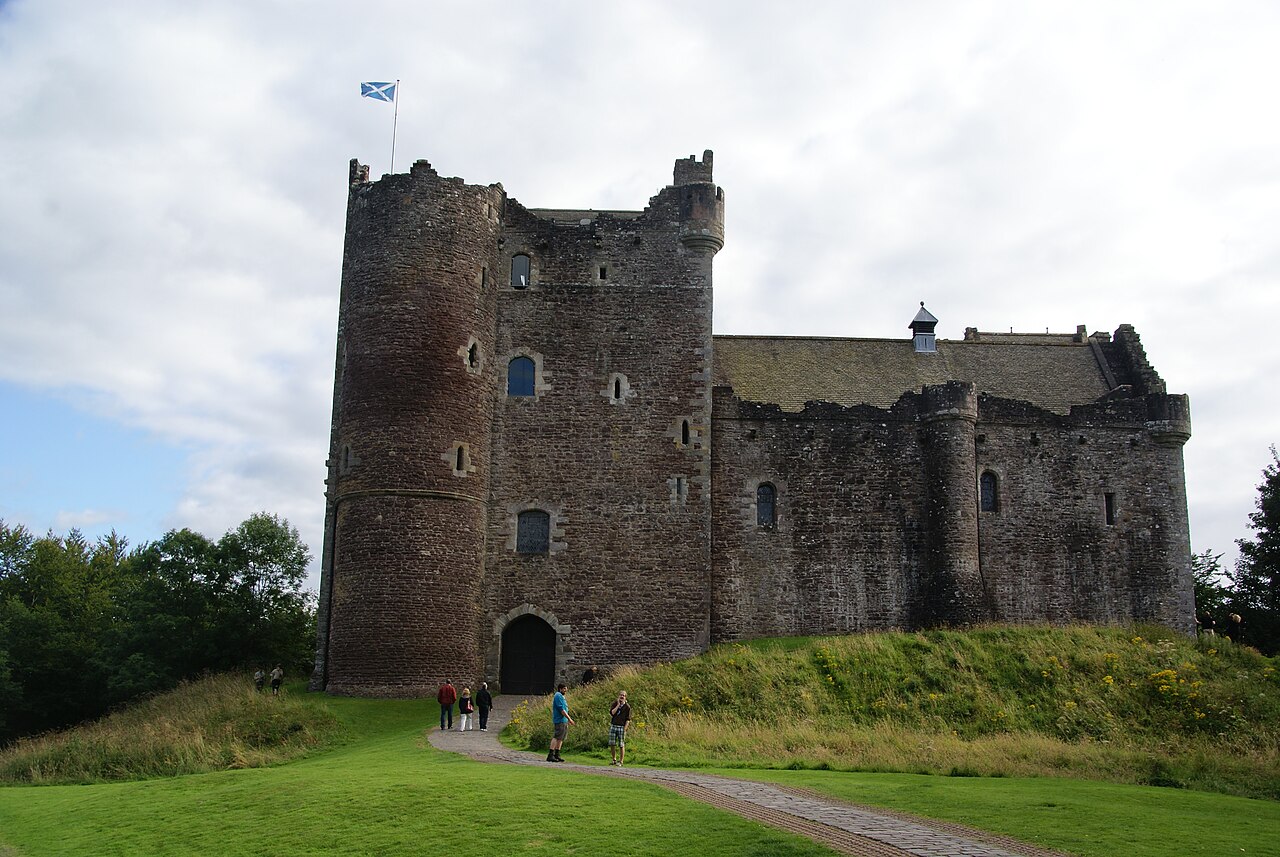
Doune Castle is a genuine fortress, not a film set. Construction began in the late 14th century under Robert Stewart, 1st Duke of Albany, who governed Scotland as its most powerful figure. The castle passed to the Crown after 1425 and later to the Earls of Moray. Historic Environment Scotland cares for it today (Historic Environment Scotland).
Fans know it as Castle Leoch, the MacKenzie stronghold where Claire first lands in the 18th century. The great hall and courtyard appear repeatedly across season one. The castle has a second claim to fame: it served as a key location in Monty Python and the Holy Grail, and the audio guide was narrated by Terry Jones of that cast.
Doune sits near Stirling, roughly an hour from both Edinburgh and Glasgow. That central position makes it one of the easiest Outlander filming locations to reach. The audio guide points out specific scenes as you move through the rooms, so even casual fans get their bearings quickly. Give yourself about 90 minutes to walk the hall, climb the tower and photograph the courtyard without rushing.
Midhope Castle: visiting Lallybroch
Midhope Castle plays Lallybroch, the Fraser family home, and it is one of the most photographed Outlander filming locations in Scotland. The tower house dates to the mid-to-late 15th century, with its earliest reference in 1458. It stands on the Hopetoun Estate near South Queensferry, about 30 minutes west of Edinburgh.
Set expectations before you go. The castle is derelict and structurally unsafe inside, so a standard ticket covers the courtyard, the archway and the exterior steps only. The famous interior scenes were shot on studio sets, not here. The estate is open seven days a week, and tickets are arranged through Hopetoun.
A short countryside walk along the Midhope Burn leads to the spot used for Jamie's cave. Many visitors underestimate how rural the approach is, so allow time and check opening hours before arriving.
Falkland: standing in for 1940s Inverness
The village of Falkland in Fife becomes Inverness in the 1940s and 1960s scenes of seasons one and two. Unlike the castles, Falkland is a living conservation area, Scotland's first, and it was once the country retreat of the Stewart kings and queens.
Several spots appear on screen within a few minutes' walk. The town square features in the very first episode. The Bruce Fountain, built in 1856, is where Jamie's ghost gazes up at Claire's window. The Covenanter Hotel stood in for Mrs. Baird's guesthouse, and the cellar of Falkland Palace became the apothecary.
The whole set of Falkland locations fits into a half-hour stroll, which makes the village an efficient stop on a wider central-Scotland loop.
Culloden, Blackness and the Highland backdrop
Culloden Moor carries the real weight of the story. On 16 April 1746, the last pitched battle on British soil took place here. The Jacobite army of Bonnie Prince Charlie was defeated in roughly an hour by government forces, with around 1,500 Jacobites killed. The battle ended the 1745 rising and reshaped Highland life. The National Trust for Scotland runs the visitor centre (National Trust for Scotland).
Blackness Castle, used as Fort William, is a 15th-century royal fortress on the Firth of Forth, nicknamed "the ship that never sailed" for its distinctive shape. Its popularity has surged: visitor numbers climbed 367% between 2014 and 2024 (VisitScotland, 2025).
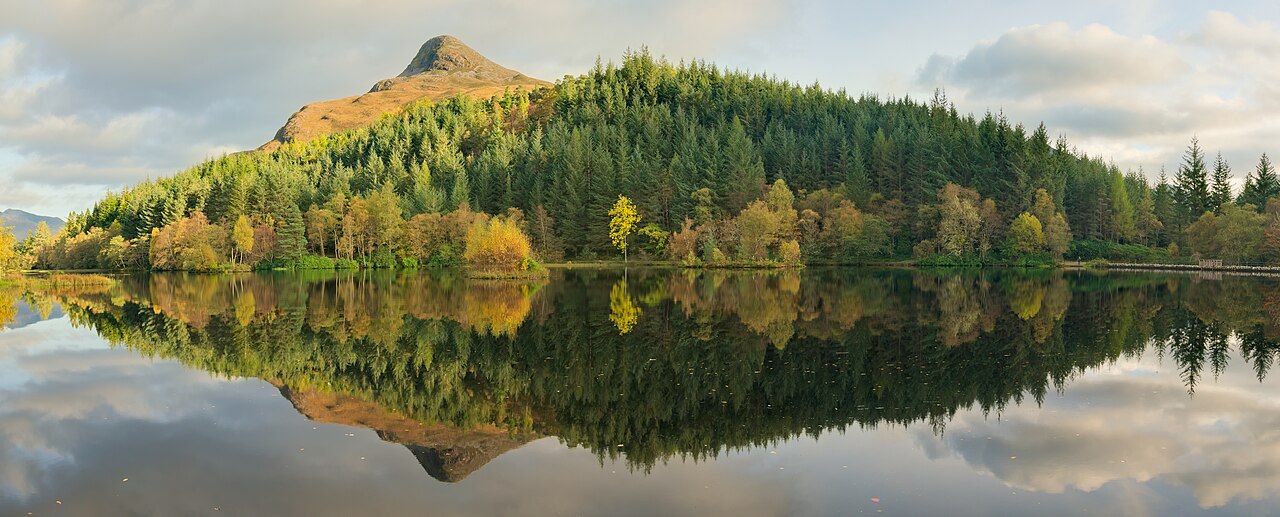
Glencoe appears in the sweeping opening credits. The cast did not film there, but the glen's history is dramatic in its own right, as the site of the 1692 massacre of the MacDonald clan. Linlithgow Palace, birthplace of Mary Queen of Scots, also features as a corridor of the fictional prison.
Together these sites give the series its emotional range, from royal grandeur to open battlefield. Visiting them in person adds context that the show only hints at, especially at Culloden, where the memorial cairn and clan grave markers stand on the moor itself.
How to combine the locations into one route
The geography does most of the planning for you. The core Outlander filming locations cluster in central Scotland, so a tight route beats random day trips. A sensible base is Edinburgh, with Stirling as an alternative.
A practical two-part plan works like this:
- Central loop (one day): Blackness Castle, Linlithgow Palace and Midhope Castle sit close together west of Edinburgh. Add Falkland or Doune Castle depending on your pace.
- Highland day (one day): Head north to Culloden near Inverness, with Glencoe as a scenery stop on the way back toward Glasgow.
Rural sites like Midhope and Glencoe have thin public transport, and parking near popular castles fills early in summer. That is where a guided trip pays off. A Slàinte Scotland group or private tour sequences the stops, handles the driving, and adds the history and whisky context that a drive-by visit misses.
A few practical tips for fans: book Midhope tickets in advance through the estate, confirm seasonal opening hours at Culloden before you travel, and wear sturdy footwear for the Lallybroch burn walk and the open battlefield. Spring and autumn bring thinner crowds and softer light for photos, while summer offers the longest days for packing in more stops. Whatever season you choose, booking castle entry ahead saves time at the gate.
Start planning your Outlander trip
Pick your base first, then decide whether you want one focused central day or a longer run north to Culloden and Glencoe. If you would rather skip the logistics, browse the guided and private tours at Slàinte Scotland Tours and match an itinerary to the locations that matter most to you.
Frequently asked questions
Can you visit inside the Outlander filming locations?
Doune Castle, Blackness Castle and Culloden have full interior access. Midhope Castle (Lallybroch) permits exterior viewing only, since the interior scenes were filmed on studio sets.
Where do most Outlander locations sit on a map?
The majority cluster around Edinburgh, Linlithgow and Stirling in central Scotland. Culloden and Glencoe lie farther north in the Highlands, which usually needs an extra day.
Do I need a car to see Outlander locations?
A car helps for rural sites like Midhope and Glencoe, which have limited public transport. A guided tour removes the driving and parking problem entirely.
Is Castle Leoch a real castle?
Yes. Castle Leoch is Doune Castle, a genuine fortress begun in the late 14th century near Stirling. It also appeared in Monty Python and the Holy Grail.